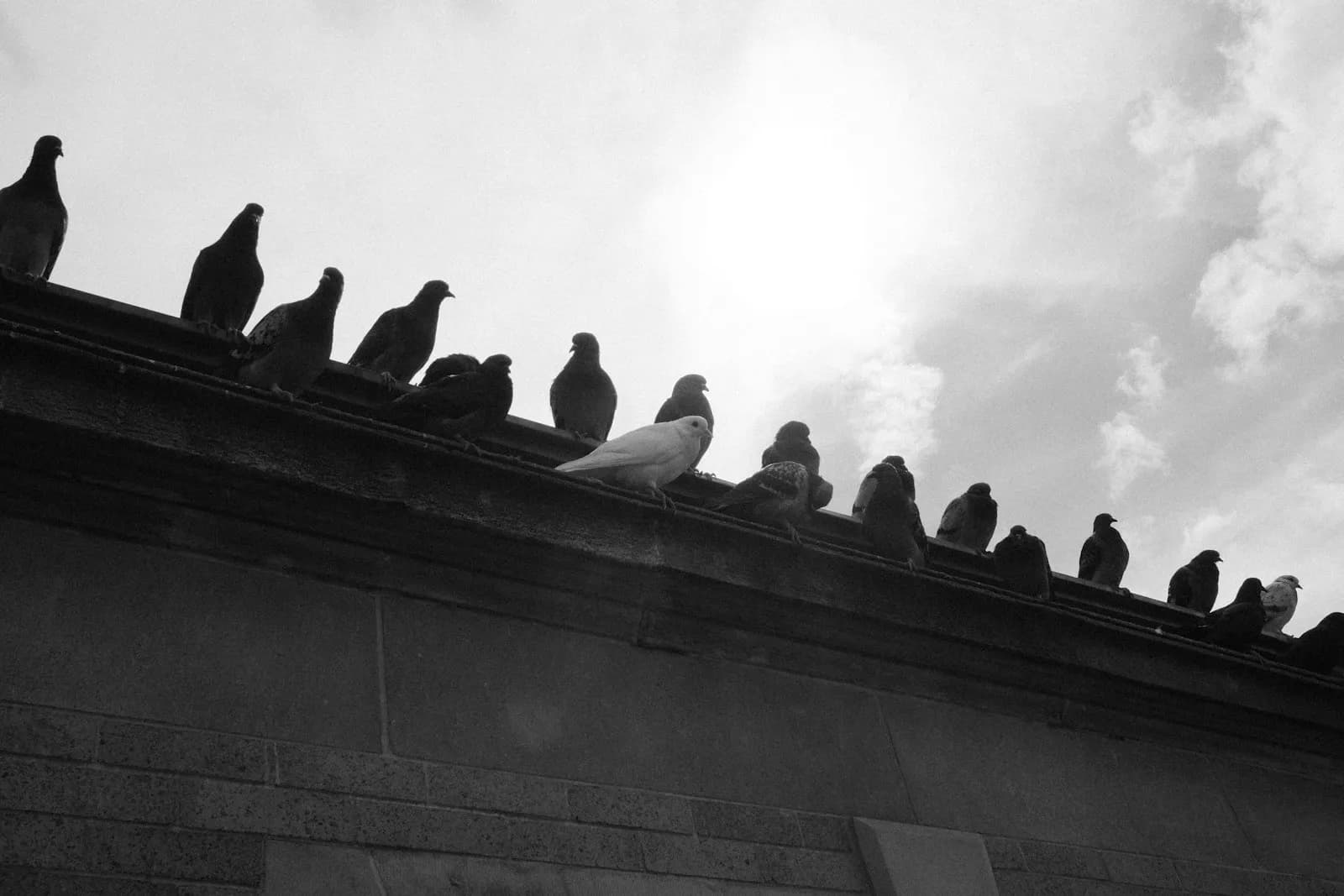
Why Exterior Bird Control Prevents Interior Infestations
2026-05-12 · 6 min read · By the Safe Haven field team
By the time a bird is flying over your sales floor or roosting in your warehouse rafters, you are already paying for it, in inspection risk, in cleanup, and in the removal call itself. The facilities that spend the least on interior bird problems are almost never the lucky ones. They are the ones that manage the exterior first.
Quick answer
Does exterior bird control really reduce interior infestations?
Yes. The overwhelming majority of interior bird problems begin outside, where birds forage, roost, and nest against the building before finding a way in through a dock door, damaged louver, or roof penetration. Reducing the exterior population and sealing entry points removes the pressure that pushes birds indoors in the first place.
How birds actually get inside a commercial building
Interior infestations are rarely random. They follow a predictable sequence. First, a building offers something birds want nearby, an unsealed dumpster, a loading area with spilled product, landscaping that drops seed, or simply a warm ledge out of the wind. A resident population establishes on the exterior. Then, every time a bay door rolls up, a man-door props open on a hot afternoon, or a rooftop unit leaves a gap around its curb, a few birds drift inside. Sparrows and starlings in particular will exploit an opening of barely an inch.
Once inside a large space, especially a warehouse or big-box ceiling, the birds find exactly what the exterior offered but better: shelter, warmth, and safety from predators. They settle into the high steel, and what was an outdoor nuisance becomes an indoor compliance problem over the produce, the packaging line, or the pharmacy.
The economics: prevention versus reaction
Interior removal in a live facility is more expensive than exterior management for one simple reason, the work is harder and the stakes are higher. A bird over a food-prep area can force a line shutdown or a failed inspection. A bird in a 500,000-square-foot distribution center has thousands of places to perch and has to be netted out one at a time without halting operations. Exterior management, by contrast, addresses the pressure at the source: thin the population, remove what is attracting them, and close the doors they use.
This is why a serious bird program treats the exterior as the first line of defense and the interior as the last. When the outside is handled, interior incidents drop, and the occasional bird that does get in is an isolated event rather than the visible tip of a resident colony.
What effective exterior management looks like
1. Population reduction
Where a nuisance population has already established, trapping and removal brings the numbers down to a level the site can hold. This is regulated work: most native birds are federally protected, and only the non-native species, primarily the European starling, house sparrow, and feral pigeon, can be controlled without a federal permit. (More on the legal line below, and in our piece on protected species and nest removal.)
2. Removing the attractant
Birds are practical. Cut off the food, water, and shelter and the site stops recruiting new arrivals. That means sealed waste handling, prompt cleanup of spilled product around docks, drainage that does not pond, and landscaping chosen with bird behavior in mind.
3. Deterrence and exclusion on the building envelope
Ledges, signage, parapets, and rooftop equipment are prime roosting real estate. Spikes, gel, shock track, netting, and slope deterrents make those surfaces unusable, while sealing gaps around louvers, doors, and roof penetrations closes the actual entry routes. This is the same toolkit covered in our exclusion guide, applied outward to keep birds off the structure rather than just out of one room.
Where the line sits between exterior and interior work
Exterior management and interior removal are not competing services, they are stages of one program. Strong exterior control prevents most interior events. But because no building is perfectly sealed and doors must open for business, a guaranteed interior removal capability remains the backstop for the bird that still finds a way in. Safe Haven is one of only two companies legally able to remove birds from the inside of a building, which means the same specialist who hardens your exterior can also clear the interior if needed, with no second vendor and no gap in accountability.
For most commercial sites, the right move is to start with an exterior assessment. It is the lowest-cost, highest-leverage intervention available, and it is the difference between paying for bird control once and paying for it again every quarter.
Sources & references
Claims in this article are drawn from the following authorities. Regulations vary by state; confirm local requirements before acting.
Related services