Staying Compliant: Protected Species & Nest Removal
2026-04-15 · 8 min read · By the Safe Haven field team
The instinct, when a nest appears over a doorway or on a rooftop unit, is to knock it down. For most birds in the United States, that instinct can be a federal crime. Before anyone removes a nest from a commercial facility, they need to know which bird built it and whether anything is living in it.
Quick answer
Is it legal to remove a bird's nest from a commercial building?
It depends on the species and whether the nest is active. Under the federal Migratory Bird Treaty Act, it is illegal to destroy a nest containing eggs or chicks, or to possess a native bird's nest, without a USFWS permit. Empty, inactive nests of protected species may generally be removed, and non-native species, pigeons, European starlings, and house sparrows, are not protected at all. When in doubt, treat the nest as protected and call a specialist.
The law that governs almost every bird in America
The Migratory Bird Treaty Act of 1918 (16 U.S.C. 703-712) is the controlling federal statute, enforced by the U.S. Fish & Wildlife Service. It makes it unlawful to pursue, hunt, take, capture, kill, possess, sell, or transport any migratory bird, or any part, nest, or egg, except under a valid federal permit. The protected list runs to more than 1,000 species and includes the overwhelming majority of birds native to the United States.
According to USFWS, it is illegal to destroy a nest that has eggs or chicks in it, or that still supports young birds dependent on it, and it is illegal to keep a removed native nest without a permit. Penalties are not trivial: the act carries fines and the possibility of jail time, and equipment used in a violation can be seized.
Active versus inactive: the distinction that decides everything
The single most important question is whether the nest is active. An active nest, one with eggs or chicks, or with young still relying on it, is protected for protected species, full stop. An inactive nest, empty, abandoned, or one where all young have already fledged, can generally be removed for most protected species, as long as no birds or eggs are taken in the process. USFWS notes that nest destruction which results in the unpermitted take of birds or eggs remains fully prosecutable, so timing and verification matter.
This is why fledging timelines drive the schedule. If young are present, the lawful path is usually to wait until the nest becomes inactive, then remove it and immediately exclude the site so a new nest cannot be built. Acting too early is the violation; acting at the right moment, paired with exclusion, is the durable fix.
The non-native exception
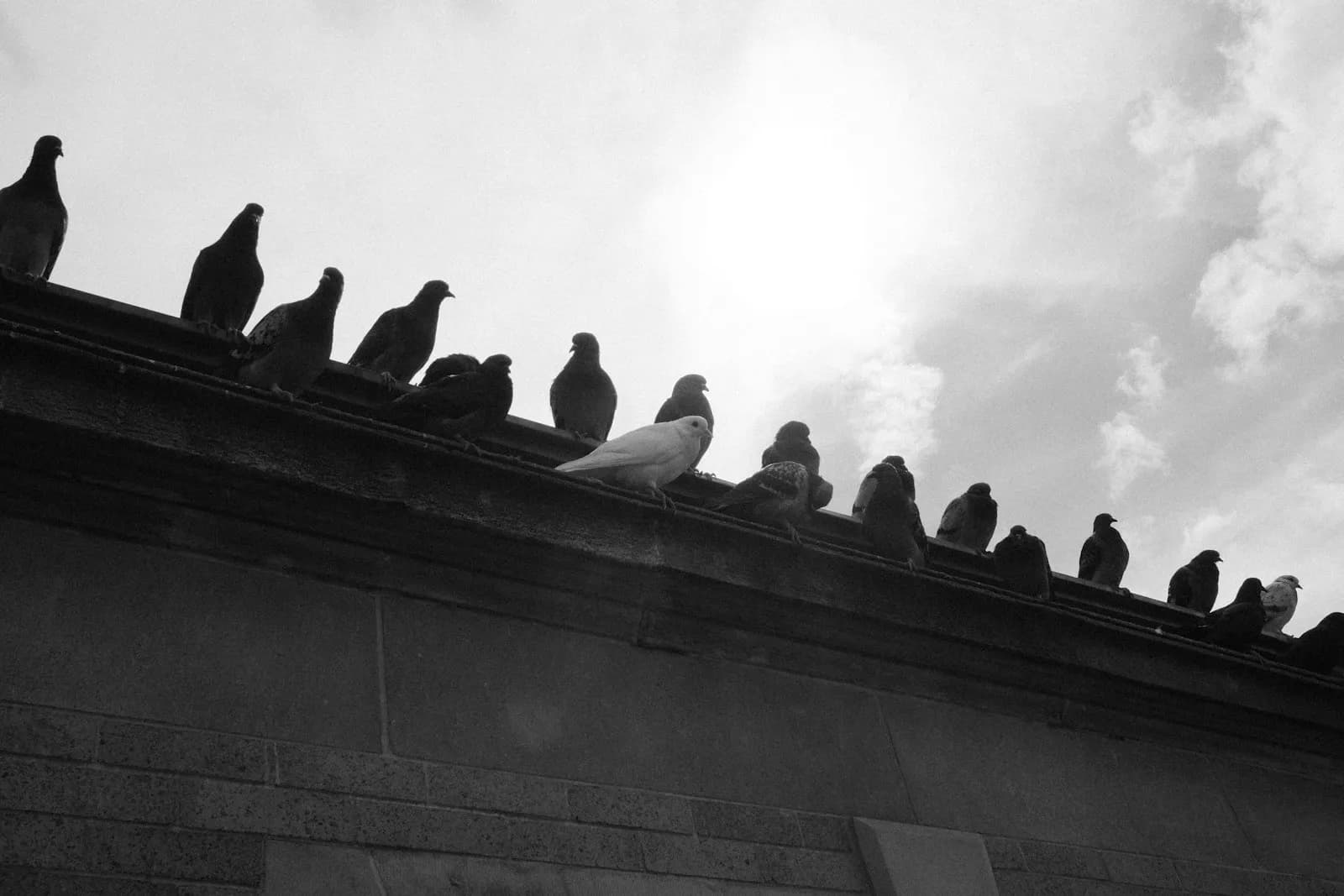
Three of the most common commercial pest birds are not protected by the MBTA because they are non-native: the feral pigeon, the European starling, and the house sparrow. Their nests, eggs, and young may be removed under federal law. State or local rules can still apply, and humane handling is always the standard, but these species are where most lawful commercial nest removal happens.
Geese are their own category
Canada geese are native and federally protected, but they are managed under specific USFWS depredation orders and registration programs that, in defined circumstances, allow nest and egg treatment, often by addling under a required registration or permit, plus harassment programs. The rules are specific and enforced, which is why goose work is permit-driven and documented rather than do-it-yourself.
Why this is a specialist’s job, not a maintenance task
A maintenance crew with a ladder cannot be expected to identify a species, determine nest activity, and know the federal and state permitting status on the spot, and the cost of getting it wrong is a federal violation. A specialist does three things a generalist cannot: correctly identify the bird, lawfully determine whether and when the nest can be touched, and, where a permit is required, operate under it. Safe Haven’s technicians are trained to make exactly these determinations and to pair compliant removal with exclusion so the nest does not simply reappear.
The compliant sequence is consistent: identify the species, confirm whether the nest is active, wait for inactivity or secure the proper permit, remove the nest, then exclude the location. Done in that order, nest removal protects the facility and keeps it on the right side of federal law. This is not the place to guess.
Sources & references
Claims in this article are drawn from the following authorities. Regulations vary by state; confirm local requirements before acting.
Related services