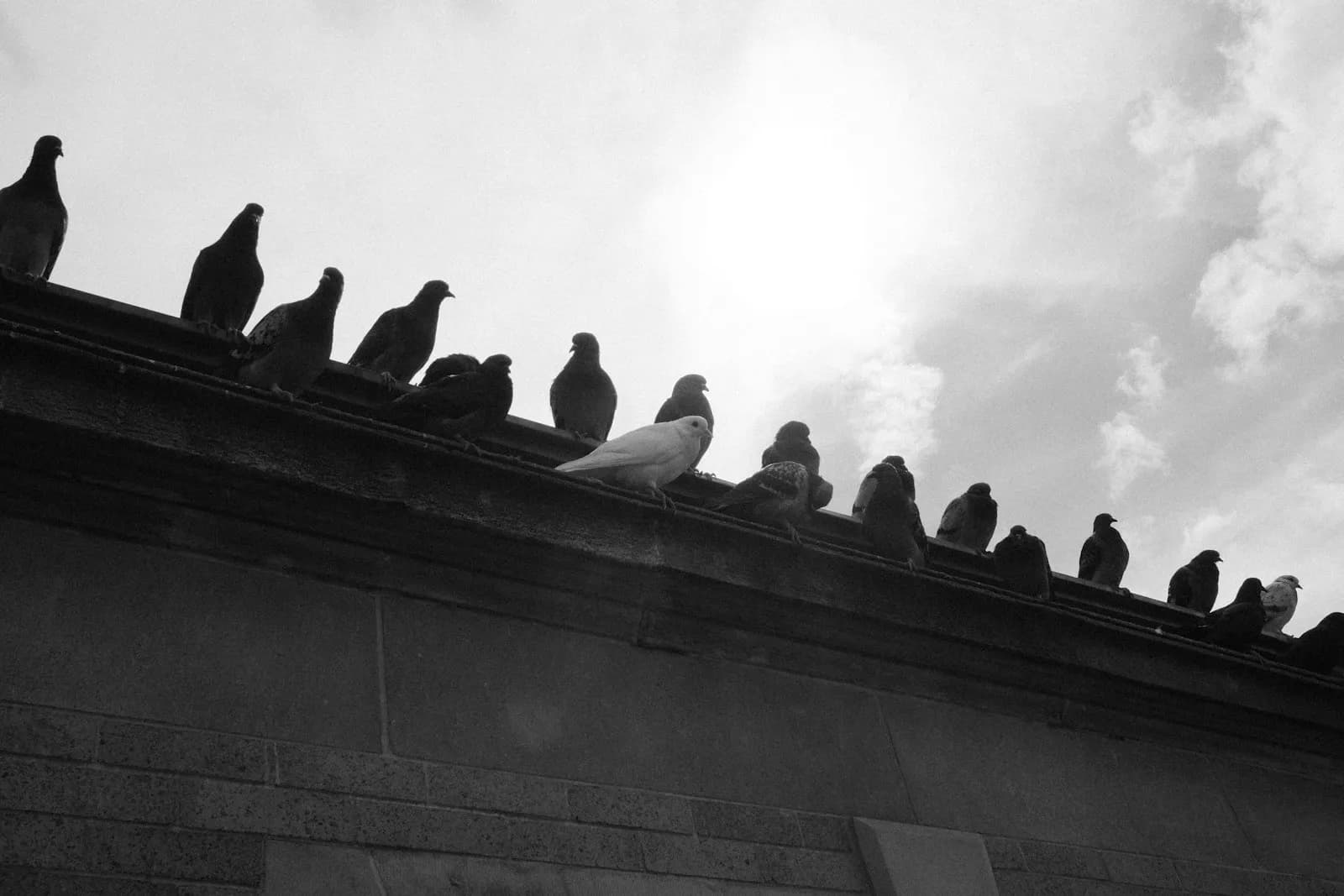
Vulture Deterrence for Rooftops & Towers
2026-03-04 · 6 min read · By the Safe Haven field team
A vulture on a rooftop is not the same problem as a pigeon on a ledge. They are larger, more destructive, remarkably persistent, and, like nearly all native birds, federally protected. Moving them requires a strategy that is equal parts behavior, engineering, and compliance.
Quick answer
How do you legally get vultures off a commercial rooftop or tower?
Through compliant deterrence, not removal. Vultures are protected under the federal Migratory Bird Treaty Act, so you cannot harm them, and lethal control or handling requires a USFWS permit. The lawful approach is a deterrence program, removing roost appeal, disrupting the behavior, and hardening the structure, so the birds relocate themselves. Where direct removal of protected raptors is unavoidable, it must be done under federal permit by qualified specialists.
Why vultures target rooftops and towers
Vultures are social, intelligent, and drawn to tall structures with good thermals and clear sightlines, exactly what a commercial rooftop, communications tower, or water tank provides. Once a group adopts a structure, the damage is real: they tear at roofing membrane, rubber seals, caulking, vent boots, and equipment, and they leave corrosive droppings and pellets across the surface. A persistent roost can become a recurring roofing and equipment expense.
They are also creatures of habit. A vulture group that has roosted on a tower will defend that habit against half-measures, which is why one-off scare tactics rarely hold. Effective programs change the bird’s calculus permanently, not for an afternoon.
The legal line: protected birds, permitted removal
Vultures are protected under the Migratory Bird Treaty Act, the same federal statute that protects most native birds, enforced by USFWS. That has two consequences for facility managers. First, you cannot legally harm vultures or destroy an active nest without authorization. Second, while non-lethal harassment and deterrence generally do not require a federal permit, any direct removal of protected raptors, or lethal control, does, and state permits may apply on top of the federal one. This is a category where acting without the right paperwork is a federal violation.
What a compliant deterrence program looks like
Remove the appeal
Address what makes the structure attractive, accessible food sources, comfortable roosting surfaces, and undisturbed sightlines. The less the structure offers, the easier the birds are to move.
Disrupt the behavior
Layered, varied deterrents, visual, spatial, and structural, break the roosting habit. Variety matters: vultures habituate quickly to any single static deterrent, so an effective program rotates and combines methods rather than relying on one gimmick.
Harden the structure
Anti-perching systems on the surfaces vultures favor, parapets, tower members, equipment, make the roost physically unusable, converting a temporary scare into a permanent relocation. This is the same exclusion logic used elsewhere on the building envelope, scaled to large birds and tall structures.
Birds of prey indoors are a related, urgent case
Vultures roost outside, but hawks and falcons regularly become trapped inside big-box stores, warehouses, and distribution centers, drawn in after prey and then unable to find their way out. These are protected raptors too, and a trapped bird of prey is both a welfare emergency for the animal and a liability for the facility. The compliant response is prompt, humane capture and release by specialists operating within wildlife regulations, exactly the interior work Safe Haven is licensed to perform.
Why specialists, and why compliance is the whole game
Vulture and raptor work sits at the intersection of difficult animal behavior and strict federal protection. The wrong move is either ineffective, a scarecrow a vulture ignores by day two, or illegal, harming a protected bird. The right move is a layered, compliant deterrence program that relocates the birds without harm, backed by permitted removal capability for the cases that require it. Safe Haven runs that program for rooftops, towers, and structures, and handles protected raptors, indoors and out, within all local, state, and federal wildlife regulations.
Sources & references
Claims in this article are drawn from the following authorities. Regulations vary by state; confirm local requirements before acting.
Related services